 dsale@topsfp.com
 English
 русский
 español
 العربية
 中文
中文



Plan Technology Around Business Outcomes
Enterprise IT planning is most useful when it connects technology decisions with the services the organisation must deliver. Cloud adoption, edge computing, automation, AI, cyber security, data platforms, network upgrades, and hardware refreshes are not independent initiatives. They share budgets, skills, data, operational processes, supplier relationships, and customer expectations. A plan should make those relationships visible before a project becomes urgent.
Start with a service portfolio. Identify the customer-facing and internal services that matter most, their owners, dependencies, availability expectations, security requirements, growth assumptions, and recovery priorities. This gives executives and technical teams a common view of where investment will reduce risk, increase capacity, improve delivery, or create a new capability. A trend is not a business case on its own; the relevant question is what problem the organisation needs to solve and how success will be measured.
Use a rolling planning cycle rather than a fixed list of predictions. Review the current estate, planned changes, capacity, incidents, technical debt, supplier commitments, and staff capability at regular intervals. Update priorities when evidence changes. This approach keeps the plan grounded in operating conditions while preserving a long-term direction.
Establish Governance and Clear Ownership
Governance should enable responsible decisions, not add unproductive delay. Define who owns service outcomes, architecture standards, cyber risk, data, procurement, financial approval, and operations. Specify the decisions that require design review, security review, change approval, customer communication, or executive sponsorship. A clear model helps teams move quickly when an opportunity or incident appears because the required roles and evidence are already known.
Document the target architecture at the right level. It should explain the preferred patterns for identity, network segmentation, data protection, cloud accounts, application integration, monitoring, automation, and resilience. The architecture should allow justified exceptions, but an exception needs an owner, a reason, a risk assessment, and a review date. Unrecorded exceptions are a common source of technical debt and operational uncertainty.
Maintain an accurate inventory of applications, infrastructure, interfaces, data stores, cloud services, and suppliers. Inventory is not merely an audit activity; it allows teams to understand impact, plan upgrades, detect unsupported components, assess capacity, and respond faster when a vulnerability or provider issue affects the environment.
Use Cloud and Hybrid Architecture Intentionally
Cloud services can provide flexibility, but they do not remove the need for engineering discipline. Select a deployment model based on workload behavior, data sensitivity, performance needs, operational skills, integration requirements, cost visibility, and recovery objectives. Some workloads may benefit from managed services, while others require dedicated hardware, predictable local performance, or stronger control over an existing environment.
Map the full service path for each significant workload. Identify identity dependencies, network routes, DNS, security controls, storage, backups, monitoring, administrative access, and external APIs. A cloud migration that moves only the application while leaving hidden dependencies behind can increase complexity rather than reduce it. Define the service boundary and measure the customer outcome after migration.
Plan cloud financial management as an operating capability. Tag resources, assign owners, monitor consumption, review commitments, and investigate unexpected changes. Cost decisions should consider resilience, performance, data transfer, operational effort, licensing, and recovery—not only the immediate price of compute or storage. A less expensive configuration that creates recurring support work or prevents reliable recovery may not deliver value.
Adopt Edge Computing for a Defined Need
Edge computing can bring applications or processing closer to devices, sites, or users when the use case benefits from local response, reduced data movement, continuity during connectivity disruption, or specialised integration. It also creates more locations to secure, monitor, patch, support, and recover. Choose edge placement because the service requirements justify it, not because edge is a general replacement for central infrastructure.
For every edge deployment, define the operating model. Identify local power and cooling needs, network connectivity, management access, physical security, hardware lifecycle, remote-support process, data synchronisation, monitoring, backup, and recovery. Standardise the design where possible so that each site can be provisioned and supported with the same evidence and runbooks.
Test the failure modes. Confirm what happens if a local site loses connectivity, if the central service is unavailable, if a device fails, or if a configuration update cannot be completed. Edge environments are often valuable precisely because they support distributed operations, so their resilience must be tested under the conditions they are expected to handle.
Use Automation to Improve Reliability
Automation should convert approved, repeatable work into controlled workflows. Common examples include infrastructure provisioning, configuration backup, inventory collection, compliance checks, patching preparation, monitoring setup, and routine validation. Begin with a process that is well understood and causes measurable operational friction. Map its current steps, define desired inputs and outcomes, add approval and rollback points, and test it with the people who will use it.
Keep automation definitions under version control and subject to peer review. A change to an automation template can affect many systems quickly, so it must be tested in a representative environment and monitored during rollout. Include clear stop conditions; a workflow should pause safely when a precondition, validation test, or approval requirement is not met.
Measure whether automation is actually helping. Track deployment success, failed changes, time saved, exception volume, configuration drift, and the quality of records produced. High task volume is not evidence of value if automation merely moves errors faster. The best automation improves consistency, visibility, and recovery as well as speed.
Integrate Data and AI Responsibly
Data and AI initiatives should begin with purpose, ownership, quality, security, and operational readiness. Identify the data source, permitted use, classification, retention, access model, quality controls, and the decision that the system is expected to support. Build monitoring for data changes, model or workflow performance where applicable, access activity, and exceptions. A useful system needs more than a promising demonstration; it needs a safe path from development to operation.
Do not treat data availability as data quality. Establish validation for important datasets, transformation pipelines, reference data, and integrations. Record lineage and change history so that teams can understand what information influenced an output. For customer-facing or high-impact use cases, involve the appropriate business, security, legal, privacy, and risk owners early in the design.
Ensure the infrastructure plan supports the actual workload. AI and data platforms may require specialised compute, high-throughput storage, network capacity, power, cooling, observability, and access controls. Plan these requirements with measured evidence and staged testing instead of relying on peak estimates or generic product claims.
Manage Technical Debt and Lifecycle Risk
Technical debt is not only old code. It can include unsupported hardware, undocumented interfaces, inconsistent configurations, manual operating procedures, missing backups, unowned cloud accounts, expired certificates, and temporary exceptions that became permanent. Maintain a register of material risks with an owner, business impact, dependency, remediation option, and target review date.
Prioritise debt by service impact and probability, not by age alone. Some legacy systems may be stable and low risk; others may be critical but difficult to patch, recover, or support. Use the register to sequence modernisation, isolation, monitoring, replacement, or retirement work. Record the expected outcome so that progress can be measured against reduced risk or improved operational capability.
Plan technology refreshes before support ends. Confirm hardware compatibility, software prerequisites, capacity, data migration, maintenance windows, vendor support, spare-parts strategy, and rollback. Staged upgrades with clear validation are safer than deferring replacement until an unsupported component fails.
Build Resilience and Security into Every Initiative
Security and resilience are design requirements. For each service, define identity and access controls, network segmentation, patching, logging, monitoring, data protection, incident response, and recovery. Verify that privileged access is controlled and that administrative workflows have evidence. Use the organisation’s approved frameworks and policies to align technical decisions with risk management.
Test recovery rather than assuming it. Backups, replicas, alternate sites, spare devices, and cloud regions are useful only when the relevant service can be restored with the required dependencies and operating procedures. Conduct controlled tests, record actual results, and use the findings to improve capacity, documentation, access, and runbooks.
Resilience also includes communication. Define who makes operational decisions, who informs customers or leaders, how status is recorded, and when a provider or specialist team must be engaged. A technically capable team can still struggle during an incident if ownership and communication are unclear.
Choose Suppliers as Long-Term Partners
Suppliers provide technology, support, logistics, managed services, and specialist knowledge. Evaluate them against the actual service requirement: compatibility, support scope, delivery process, security practices, documentation, warranty, escalation, lifecycle, and evidence of testing. Avoid selecting only by feature list or unit price; an unsupported configuration or unclear handover can create more cost than an apparent initial saving.
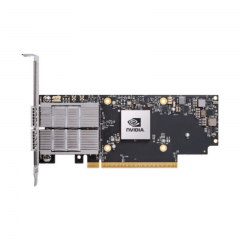
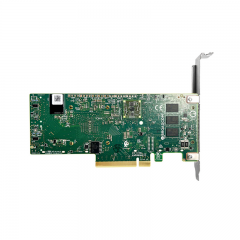
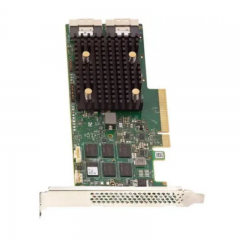
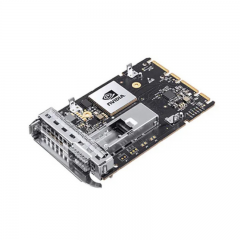
For technical hardware, request complete information on part numbers, platform compatibility, firmware requirements, interfaces, power and cooling, included accessories, testing, and lead-time assumptions. Stage representative equipment when the project risk warrants it. Maintain records that enable future teams to understand what was approved and installed.
Develop People and Operating Practices
Technology plans succeed through people who can operate, secure, improve, and communicate about the environment. Identify the skills required for cloud operations, networking, data management, automation, security, facilities, vendor coordination, and incident response. Create practical training, peer review, documentation, and succession plans. Strong operating practice is a competitive capability, especially when systems span several locations and providers.
Use post-incident reviews, change reviews, and project retrospectives to improve the plan. Focus on evidence and system conditions rather than blame. Lessons from a difficult deployment, missed alert, or slow recovery can improve architecture, automation, runbooks, supplier processes, and training for the next initiative.
Practical Planning Checklist
Before approving a major initiative, confirm the business outcome, owner, architecture, security requirements, dependencies, capacity, operating model, supplier responsibilities, rollout stages, validation method, rollback, and success measures. Review the plan after launch using actual performance, cost, incident, and customer evidence. Enterprise IT planning becomes durable when strategic priorities and everyday operations reinforce each other.
